Article
Here Comes the Boom!
HERE COMES THE BOOM!
The heat is here, and the sticky feeling of summer accompanies nearly every outing. Marking 250 years of the United States of America, the 4th of July is just around the corner, and communities are preparing for one of the largest celebrations in recent memory. Parades, festivals, concerts, and fireworks displays are planned throughout the Commonwealth.
For many of us, fireworks symbolize celebration and tradition. In the world of animal welfare, they often bring anticipation of one of our busiest and most stressful times of the year. In 2025, our shelter saw a 51% increase in intakes in July vs June. Each Independence Day, animal shelters across the country see a sharp increase in lost pets. The American Society for the Prevention of Cruelty to Animals reports that one in five lost pets goes missing after being scared by loud noises, including those from fireworks displays.
The effects of fireworks on animals are well-documented.
Dogs can hear at frequencies far beyond human capability. While humans can hear sounds between 20 Hz and 20,000 Hz, dogs can hear sounds between 40 Hz and 60,000 Hz. This means that dogs can hear sounds that are both higher and lower in frequency than humans can. The shape of their ears makes a difference, too; their shape helps to collect and direct sound waves to the eardrum, which means that dogs are also able to pick up on sounds from further away than humans can. What is loud to us can feel overwhelming and disorienting to them.
Sudden blasts, vibrations, flashes, and prolonged noise can create an environment that many animals interpret as danger. This doesn’t just affect companion animals. In an interview with Dr. Sam Sander from the
University of Illinois, “From studies and anecdotal reports, we know that the shock of the explosions causes wildlife to flee…animals have been observed running into roadways, flying into buildings and other permanent structures, and abandoning their nests and young.”
Learn more about what to do if you find a wild animal in need of help through our friends at
Rockfish Wildlife Sanctuary.
Common fear responses to look out for in your pets include:
Physical Symptoms: Trembling, dilated pupils, excessive drooling, and rapid, heavy panting.
Body Language: Tucked tails, flattened ears, or clinginess where your pet refuses to leave your side.
Displacement Behaviors: Pacing, restlessness, or repeatedly licking/chewing their own body.
Destructive/Escape Attempts: Digging at carpets, scratching at doors and windows, or trying to bolt.
Incontinence: Sudden urination or defecation in the house, even from fully house-trained pets.
Freezing/Hiding: While some pets become hyperactive, others may become completely catatonic or hide in deep, dark spaces
“My 90-pound Labrador named Bailey was terrified of thunder and fireworks,” says Libby Jones, Executive Director of the Charlottesville-Albemarle SPCA. “We jokingly called her the $70,000 dog because of the destruction she caused trying to find safety after a single boom”. Bailey would find a way to tear through fences, garage doors, screened porches, and even flooring. Their family tried all kinds of calming remedies, kennel training, and behavior modification to help Bailey through this experience. “I spent countless nights sitting in the bathtub with her because it was one of the only places she felt safe,” Jones continues, “These experiences changed how I view fireworks entirely.”
For some animals, the fear is overwhelming, not just a mild discomfort. And for the people who love them, the helplessness is heartbreaking.
Alternative celebrations can exist.
We understand fireworks are meaningful for many families and communities, but communities evolve all the time. We improve accessibility, public safety, and inclusivity. Can we celebrate in ways that reduce harm while preserving joy?
After seeing a local drone display during Boar’s Head Winter Wander in 2024, we began encouraging local organizations and municipalities to consider drone shows as an alternative to traditional fireworks. In the months leading up to July 2025, our team reached out to local governments and venues to discuss these possibilities and even secured donor support to help offset transition costs.
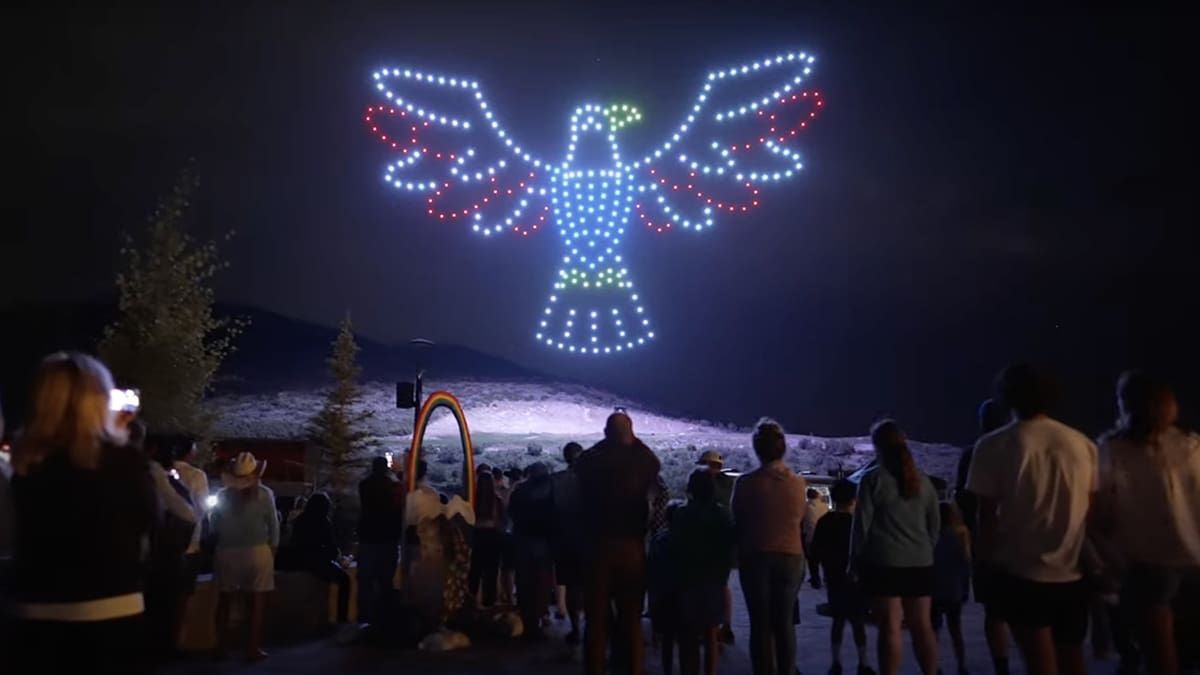
Communities across the country are increasingly exploring alternatives such as drone light shows, laser displays, synchronized music experiences, and quieter pyrotechnic options. These events can still create extraordinary experiences while significantly reducing harmful noise levels and distress. Fireworks don’t just scare animals momentarily; they can lead to long-lasting consequences like escape, injury, dehydration, separation from family groups, and habitat damage.
Help your pet during firework displays.
Even with growing awareness, fireworks are likely to remain common, especially surrounding major holidays and events. Never assume your pet won’t run. Even animals that have never escaped before may panic unexpectedly.
Here are several ways you can reduce stress and risk:
- Keep pets indoors during fireworks events.
- Ensure Microchip and ID information are current:
→ To check if your pet's microchip information is up to date, find the microchip number and enter it into the AAHA Universal Microchip Lookup tool. This will tell you the exact registry company your chip is filed under. Log in to that specific company's database to verify your phone number, address, and email are correct.
→ Don’t worry, if you do not know your pet's microchip number, you can easily retrieve it by having a vet or shelter scan your pet for free, or by checking past digital and physical vet records. - If your pets are not microchipped, talk with your veterinarian about microchipping. Our shelter also offers low-cost microchip and core vaccine clinics. This simple procedure can greatly improve your chances of getting your pets back if they become lost.
- If you have horses, you might consider marking a safety (breakaway) halter with your contact information and leaving it on your horse during this stressful time.
- Close windows, blinds, and curtains to reduce noise and flashes.
- Play calming music or white noise.
- Provide safe hiding places.
- If you're hosting guests, ask them to help keep an eye on your pets to make sure they don’t escape. Placing notes on exit doors and gates can help both you and your guests remain vigilant.
- Exercise pets earlier in the day.
- Speak with your vet ahead of time about anxiety management.
- Avoid the urge to feed your pets table scraps. Keep them away from these common foods that are actually toxic.
- If you're travelling out of town for the holiday, consider leaving your pets at home with a pet sitter or boarding them in a kennel. If you need to bring them with you, be sure you know how to keep them safe.
What to do if your pet goes missing, or if you find one!
Whether you've lost a pet or found one, we're here to help.
MY PET IS LOST:
Please take a look through the
Found Animal and
Stray Animal listings to see if someone has already found your pet or brought them to the shelter as a stray. These listings and photos are updated every hour as new reports are submitted.
If you see your pet on the list, please call us at (434) 973-5959, and our staff will inform you of the next steps to reclaim your pet.
Please bring:
your ID
proof of ownership (veterinary records,
county/city license, or photo of pet)
proof of rabies vaccination
You will be required to pay a fee to redeem your pet. Fees vary depending on how many days your animal has been cared for at the shelter.
If you do
not
see your pet on the list, please fill out the
Lost Animal report
with your information, your pet’s information, and a photo of your pet. As animals come into the shelter as strays, we reference these reports, and we will contact you if an animal matching your pet’s description comes. Lost pet reports are also listed on our
Lost Pets page for finders to reference. These lists update every hour.
I FOUND A PET:
Please take a look through the Lost Animal reports to see if someone is already looking for the animal. These listings and photos are updated every hour as new reports are submitted. If you see the pet on the list, please call us at (434) 973-5959, and our staff will inform you of next steps.
If you do not see the pet on the list, and you are able to keep the pet while we wait for its owner, please file a Found Animal report with your information, the pet’s information, a photo of the pet, and a detailed physical description of the pet. We will reach out to you as soon as the owner contacts us.
We will never share your private information without your permission. We recommend keeping the pet away from your own pets. The pet may also be microchipped or tattooed, so please call us to have the pet scanned at CASPCA or a local vet clinic as soon as possible!
Check social media to see if the pet’s owner has been posting in search of the animal. You can place an ad in the lost and found section on Craigslist, post an announcement at Charlottesville Albemarle Lost & Found Pets Facebook, Nextdoor, Pawboost, Petco Love Lost, and post found dog/cat posters in your neighborhood.
If the pet was found in the City of Charlottesville or Albemarle County, and you are not able to temporarily house the pet, you may bring them to the shelter to be signed in as a stray. Please call (434) 973-5959 for next steps.
The Charlottesville-Albemarle SPCA only accepts stray animals found in the City of Charlottesville or Albemarle County. If you have found a pet in another jurisdiction, refer to the
list of regional animal shelters.
If you have found a sick or injured pet after hours, please contact:
Greenbrier Emergency Animal Hospital
(434) 202-1616
If you have found sick, injured, or orphaned wildlife, please contact:
(540) 942-9453
(434) 263-4954
share this
The Charlottesville-Albemarle SPCA is a non-profit animal shelter and community resource center located at 3355 Berkmar Drive in Charlottesville, Virginia. Established in 1914, CASPCA is proud to have served our community and their animals for over 100 years.
Related Articles
Related Articles
STAY UP TO DATE
GET CASPCA'S LATEST
Receive updates, success stories, and get a heads up on upcoming events!
Contact Us