Article
Behind Closed Doors: What is a Puppy Mill?
They thrive in silence. They depend on invisibility.
And for far too long, they’ve succeeded.
But for advocates like Sheila McCarthy, silence is not an option.
Through firsthand experience, deep community involvement, and a profoundly personal connection to the issue, Sheila has become a voice for animals who cannot speak for themselves and a force determined to bring this hidden industry into the light. For the past three years, Sheila McCarthy has been the presenting sponsor of
Bow-WOW-Walk, our annual fundraiser and community dog walk, this year taking place during Puppy Mill Action Week.
What is a Puppy Mill?
At its core, a puppy mill is not just irresponsible breeding. It is systematic, profit-driven exploitation.
Commercial breeding operations produce animals at scale, often maintaining dozens of breeding dogs to supply pet stores, brokers, and online marketplaces. While some are labeled “USDA-licensed” or “professional,” these terms can be misleading. High-volume breeding, even when regulated, often limits the ability to provide meaningful individual care.
Dogs in these environments are not treated as companions. They are inventory. “It is a miserable life for them,” McCarthy says plainly. They are confined, repeatedly bred, deprived of exercise, affection, and often basic medical care. And when they can no longer produce…they are discarded.
How To Spot a Puppy Mill:
→ You cannot meet the mother
→ The seller is offering multiple breeds
→ No contract requires the dog to be returned if you can’t keep them
→ Puppies are living outside
→ Puppies are available before 8 weeks of age
→ Puppies appear unhealthy
→ Questions are deflected or discouraged
When suffering looks the same, but isn't.
Not all large-scale animal neglect comes from the same place, and understanding the difference matters.
The line between a crowded home and a commercial operation can blur at first glance.
Libby Jones, Executive Director, offers insight into a case she worked. Hoarding often begins not with exploitation, but with unraveling. What started as “a registered business… a love of the breed and good intentions” deteriorated after profound personal loss. The breeder lost her son, became isolated, and was later diagnosed with terminal cancer.
By the time authorities intervened, the woman had passed, leaving:
- ~20 dogs inside the home
- ~80 more outside on the property
- Over 100 animals did not survive
“Hoarding is a mental health disorder,” Jones explains. That context does not lessen the suffering, but it helps explain the absence of intent to profit from it, which means the approach and solutions to these cases must be different. Still, the pipeline surrounding these situations reveals another truth.
Jones recalls “the conditions these dogs were living in were so severe, words couldn’t even describe them." One pup stood out: an adorable 9-month-old being used as a stud. “I walked into the clinic while he was being examined. He weighed just 14 pounds when he should have been closer to 30,” she says.
As they investigated further, they discovered he had been purchased from a commercial breeder in Arkansas.
“Any veterinarian approving transport across state lines… would have felt his Grade 6 heart murmur. It felt like a washing machine in his chest,” says Jones.
This means that someone knew and chose to look the other way.
“This case was tragic on many levels, generating a slew of emotions," says Jones. "Now imagine if she wasn't sick and had intentionally neglected the animals’ basic needs to increase her profit margins.”
And that is where the distinction sharpens:
- Hoarding is driven by mental health collapse and loss of control.
- Puppy mills are deliberate systems designed to generate profit even when animals suffer.
The Yoder Case: When the Curtain Was Pulled Back
For Sheila, one case transformed concern into conviction.
The Yoder puppy mill didn’t look like what people expect. Visitors were welcomed into a clean home. Puppies were presented in a controlled, comforting environment. A child reassured buyers that they were well cared for.
But hidden from view, down a hill, was the truth. A barn filled with dogs in chicken cages.
The conditions were staggering:
- Collars embedded into skin
- Advanced dental disease
- Extreme fear of humans from prolonged abuse
At the Charlottesville-Albemarle SPCA, we believe every animal deserves compassion, protection, and a safe home. Two years ago, 81 dogs were rescued from deplorable conditions at Shady Lane Farm in Free Union. The images from that day —
dogs matted, neglected, frightened
— are still fresh in our minds.
Eighty-one dogs were rescued from that single property. This wasn’t just cruelty. It was a carefully constructed deception.

For Sheila McCarthy, this fight has a face: Junebug.
Junebug was rescued from the Yoder mill through
Dogs Deserve Better, where their dedicated team quickly identified her special needs.
Junebug was diagnosed with a cerebellar malformation, which affects her balance and coordination—causing her to wobble in circles and struggle to stand. Her neurological condition was likely caused by inbreeding.
In many mills, dogs like her are euthanized or left to die. She wasn’t. She survived and became a living reminder of both cruelty and resilience.
You’ll be seeing her sweet face on this year’s
Bow-WOW-Walk event t-shirts, as she helps raise awareness and inspire our community to keep fighting for animals in need, just like her.
Where the System Steps In, and Where It Falls Short
Rescue organizations move quickly, providing urgent medical care and rehabilitation in cases like these. But their ability to act depends on something fragile: resources.
Municipal funding often covers only basic sheltering. The specialized care these animals require, surgeries, rehabilitation, and behavioral support, depends heavily on donors.
Supporters like Sheila don’t just contribute, they amplify impact.
“She inspires others to also give,” says Libby Jones. “This creates a system that is ready to address the challenges animal welfare faces on a daily basis.”
Yet even with successful rescues, critical gaps remain:
- Limited legal consequences
- Under-resourced enforcement
- Lack of preventative oversight
- Difficulty identifying hidden operations
The Myths That Keep the Industry Alive
Puppy mills persist not just because they exist but because they are misunderstood.
Myth 1: They’re rare or outdated
Reality: They are widespread and often hidden in plain sight
Myth 2: Expensive puppies are ethically bred
Reality: In the Yoder case, puppies sold for over $3,000—without basic care being provided
what actually stops puppy mills?
Puppy mills continue because demand continues.
Many operate through:
- Online marketplaces
- Brokers
- Pet stores
Buyers rarely see the conditions behind the sale. This is not a distant issue; it’s happening now, in communities across the country.
The most effective solution is also the most direct: stop buying from them.
Sheila McCarthy and the Charlottesville-Albemarle SPCA urge potential dog owners to:
- Avoid pet stores with unclear sourcing
- Never buy from websites that won’t show conditions
- Be cautious of breeders offering multiple breeds
- Insist on seeing the mother and environment
- Verify veterinary care independently
Ethical breeders operate very differently:
- Conduct genetic testing (hips, knees, eyes, etc.)
- Maintain consistent veterinary care
- Require return contracts for animals
- Protect bloodlines and prevent irresponsible breeding
“Breeding is a business, and every business should be licensed to operate and inspected for health and safety,” says Libby Jones. Cut off demand, and the system collapses.
The Power of Collective Action
Everyone has a role to play:
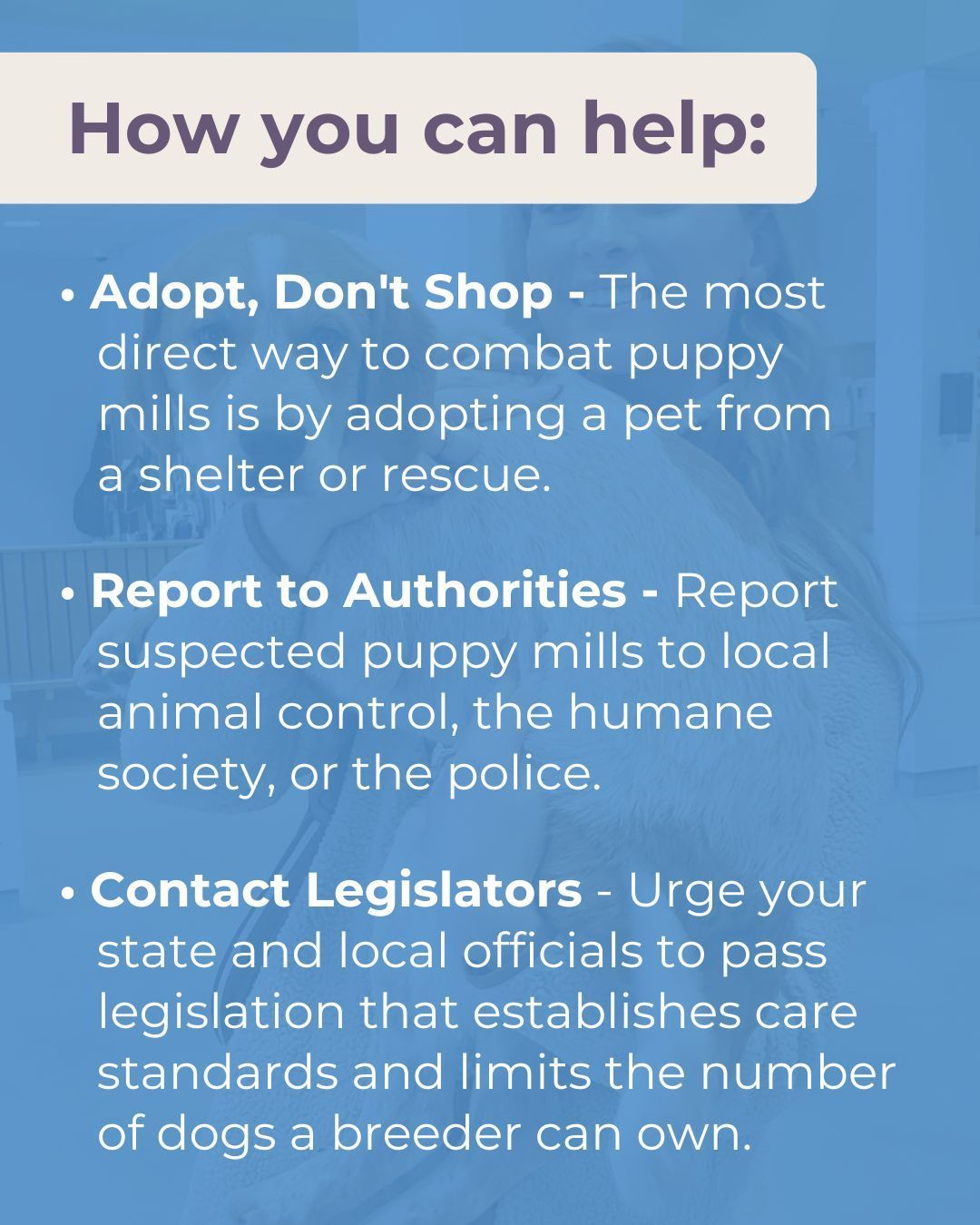
- Adopt from shelters and rescues. Local shelters and rescues have animals in need right now.
- Educate others. Share what you know. Awareness disrupts the system.
- Support stronger legislation.
- Donate to organizations doing the work. Care, rescue, and advocacy all require funding.
Small actions, multiplied across a community, create real change. Sheila has seen what happens when people come together: Rescues mobilize, awareness spreads, and pressure builds. But she has also seen what happens when justice falls short.
In the Yoder case, those responsible pled guilty to misdemeanor animal cruelty—and avoided jail time.
“They should have received jail time,” she states.
Despite everything, hope persists. It lives in:
- Communities that refuse to stay silent
- Rescues that act when others cannot
- Supporters who sustain the work
- Survivors like Junebug
- A growing awareness that is harder to ignore
Because of supporters like Sheila McCarthy:
- Animals receive critical medical care
- Survivors like Junebug get a second chance
- And our community is better equipped to respond when cruelty is uncovered.
Puppy mills rely on invisibility, and advocacy shines a light. And once people truly see… really see what’s happening behind closed doors, silence becomes impossible.
Change begins with awareness, but it depends on action.
share this
The Charlottesville-Albemarle SPCA is a non-profit animal shelter and community resource center located at 3355 Berkmar Drive in Charlottesville, Virginia. Established in 1914, CASPCA is proud to have served our community and their animals for over 100 years.
Related Articles
Related Articles
STAY UP TO DATE
GET CASPCA'S LATEST
Receive updates, success stories, and get a heads up on upcoming events!
Contact Us