Animal Welfare Gap Analysis
This analysis was conducted to better understand the veterinary, rescue, and community support systems that influence pet retention and animal welfare across the Charlottesville–Albemarle region. As CASPCA develops its long-term strategic plan, it became increasingly important to identify where services are strong, where gaps exist, and what barriers prevent pet owners from accessing care before crises occur. By examining regional intake trends, veterinary access, community resources, and cross-sector coordination, this study provides a data-informed foundation for developing targeted, preventive strategies that strengthen support for both pets and the people who care for them.
200+
Organizations Surveyed
52.4%
Survey Response Rate
2020-25
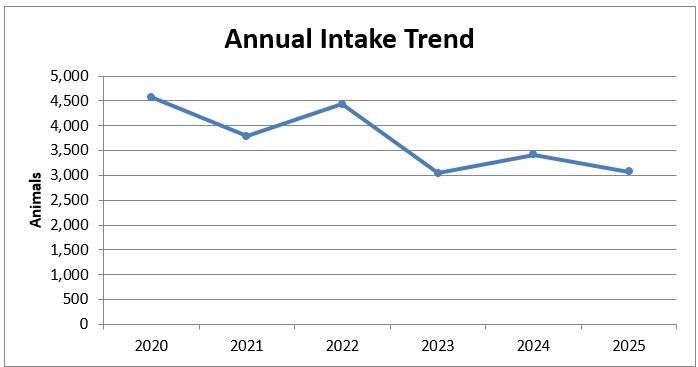
Annual Intake Data
2021-2024
Census Data
Top Service Gaps
Affordable Veterinary Care
Affordable veterinary care emerged as one of the region’s most significant animal welfare gaps. While strong network of veterinary providers exists, many pet owners continue to face barriers related to cost, urgent care access, transportation, and language accessibility. The research found that financial hardship, housing instability, and limited low-cost care options are contributing factors to delayed treatment and increased pet surrender risk.
Urgent Care Access
While many veterinary hospitals are accepting new clients, same-day and next-day appointments are limited, and urgent or emergency services are often restricted to established patients. These barriers can leave pet owners with few options when medical issues arise unexpectedly, particularly for households already facing financial or transportation challenges.
Transportation Assistance
Transportation barriers particularly for rural residents, older adults, individuals without reliable transportation, and foster-based rescues. The research found that only a small number of organizations currently offer mobile services or pet transportation assistance, creating additional obstacles to preventive care, spay/neuter access, and urgent treatment.
Crisis Boarding
Families experiencing housing instability, medical emergencies, domestic violence, hospitalization, or other crises often have limited options for safely housing their pets during periods of transition. Without temporary support, many pet owners face the heartbreaking decision to surrender their animals. Expanding crisis boarding and short-term foster support could play a vital role in keeping pets with their families and preventing unnecessary shelter intake.
Language Services
The research found that Spanish-language support is inconsistently available among veterinary providers and community organizations, limiting access to information, preventive care, financial assistance programs, and available resources for some households.
Key Findings
The research found that the Charlottesville–Albemarle region has a strong network of veterinary and animal welfare organizations, but significant gaps remain in affordability, urgent care access, transportation, crisis support, and service coordination. Many of these challenges are closely tied to broader community issues such as housing instability, financial hardship, and limited access to preventive care.
-32.9%
Intake Change vs 2020
3,177 pets
Average Intake Annually
May- July
Average highest intake window
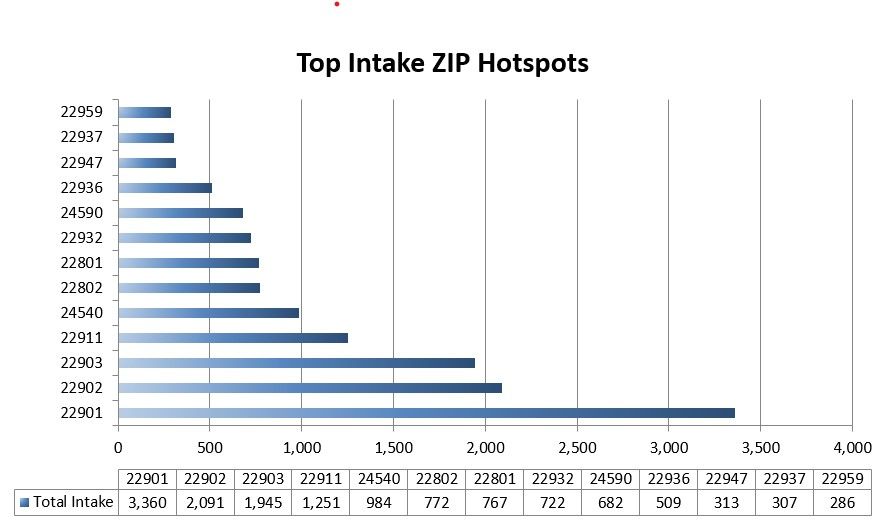
22901
Highest Intake ZIP
Veterinary Stats
21
General Practice Clinics
1
High Volume Clinic
$50-$85
Average Exam Fee
1 : 1
Recommended for Optimal Efficiancy
~2.4 : 1
Support Staff : Veterinarian Ratio
4 : 1
Recommended for Optimal Efficiancy
~1 : 2
Licensed Vet Tech : Veterinarian Ratio
1 : 1
Recommended for Optimal Efficiancy
Gap Analysis
The region has veterinary providers and animal welfare organizations, but major gaps remain in affordability, accessibility, and coordination.
CASPCA Intake Trends
- Intake patterns are highly seasonal, with nearly one-third of annual shelter intake occurring between May and July.
- A relatively small number of ZIP codes contribute disproportionately to shelter intake, indicating opportunities for targeted community intervention.
- Many existing services operate independently, and stronger coordination between organizations could improve efficiency and reduce preventable pet surrender.
- The findings suggest the region’s greatest need is not more services overall, but improved accessibility, coordination, and preventive support systems that help families keep pets in their homes.
Veterinary Care Access
- Most veterinary hospitals are accepting new clients, but timely care remains limited.
- Very few providers offer same-day or next-day appointments for urgent, non-emergency needs.
- Urgent and emergency care are often restricted to existing clients only.
- Affordable veterinary care remains one of the region’s largest unmet needs.
- Financing options exist, but true low-cost or subsidized care is limited.
- Mobile veterinary services are scarce, creating barriers for rural, low-income, elderly, and transportation-limited pet owners.
- Spanish-language veterinary access is limited across the region.
Rescue & Shelter System Challenges
- Shelters and rescues depend on a small number of veterinary partners.
- Limited access to spay/neuter and dental procedures creates intake bottlenecks and longer lengths of stay.
- Veterinary capacity, not adoption demand, is one of the biggest constraints on animal rescue efforts.
- Foster-based rescues face transportation and scheduling challenges when accessing care.
- Organizations largely operate independently, with limited coordinated veterinary access systems.
Community Impact Areas
- Pet owners experiencing financial hardship often delay care until conditions become emergencies.
- Limited access to pet-friendly housing increases the risk of pet surrender.
- Crisis boarding and temporary housing support for pets is extremely limited.
- Community cat/TNR resources rely on a very small provider network.
- Preventive care outreach, vaccine clinics, and transport assistance remain limited.
Areas of Focus
After reviewing the research and recommendations, CASPCA will determine key initiatives to address the service gaps outlined in this report.
Increase Access to Care
The veterinary shortage is not going to be solved in the next 10 years.
- Expanding and diversifying scope of work for support staff
- Increase mobile veterinary outreach and transportation support
- Support rescues through shared veterinary partnerships and coordination
- Target prevention efforts in high-intake communities and peak intake seasons
Advocacy/Regulatory/Operational
Pet Retention
- Build stronger collaboration between animal welfare, housing, and human-service organizations
- Invest in preventive care strategies that keep pets healthy, housed, and with their families
- Strengthen pet retention programs like Pet Food Pantry and crisis boarding programs
- Improve access to bilingual and culturally responsive services
Collaboration/Engagement/Community
Expand Clinic Footprint
- Address the buildings infrastructure challenges, bottlenecks, and inefficiencies
- Explore renovation or new build opportunities for expansion
Capital Improvement/Community